By IGAMINGHUNT Operations Director - Anna Bezsmertna
•
October 13, 2026
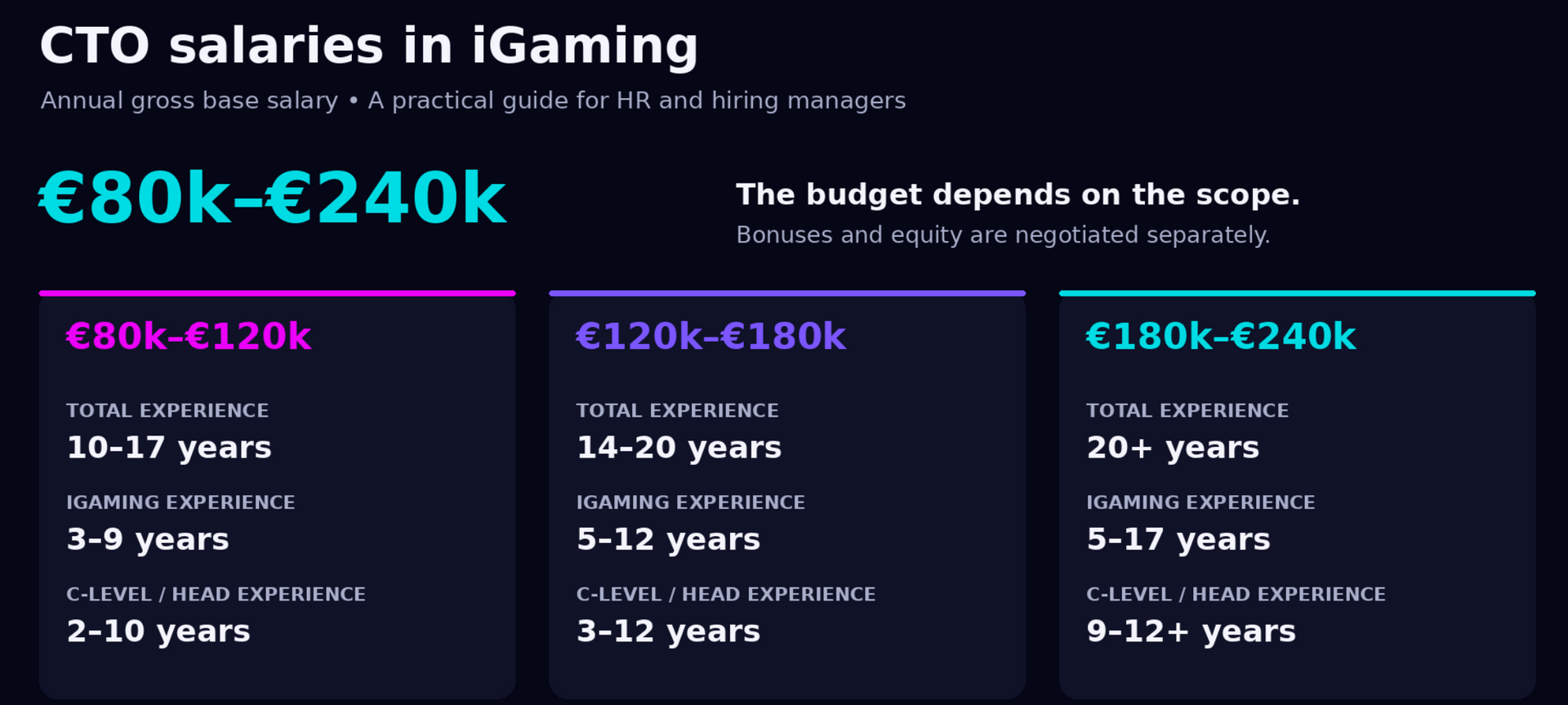
Salary ranges and the experience behind them Experience ranges overlap. A longer career does not automatically translate into a higher salary requirement. €80,000–€120,000 gross annually Total experience: 10–17 years. iGaming experience: 3–9 years. C-level / Head experience: 2–10 years; this range also includes engineering managers and platform leads. Products: casino platforms, white-label solutions, sportsbook, trading tools, betting feeds, game-provider infrastructure, payment orchestration, CRM and bonuses. Role scope: hands-on technology ownership or leadership of a defined engineering function. €120,000–€180,000 gross annually Total experience: 14–20 years. iGaming experience: 5–12 years. C-level / Head experience: 3–12 years; also includes development leadership across multiple teams. Products: casino platforms and operators, sportsbook, poker, game aggregation, slots, instant games, sports and esports betting content, payment hubs, CRM and gamification. Role scope: engineering, architecture or combined technology and operational leadership. €180,000–€240,000 gross annually Total experience: 20+ years. iGaming experience: 5–17 years. C-level experience: 9–12+ years, including CTO, Group CTO and CEO responsibilities. Products: casino and sportsbook platforms, multi-brand operators, B2B iGaming / SaaS platforms, slot and table-game studios, sports and esports betting content, payment hubs. Role scope: substantial technology and business responsibility, potentially spanning several products, brands or companies. Base salary, bonuses and equity Fixed salary is only one part of the negotiation. In IGAMINGHUNT’s recruitment data: 27% express interest in equity. 18% express interest in performance bonuses. 36% mention bonuses or equity as part of their expectations. These categories overlap: equity and bonuses may be alternatives within the same negotiation. How equity affects the package Salary plus equity: ownership may be expected alongside the full fixed salary. Reduced salary plus ownership: a lower base can be negotiated where the ownership opportunity is credible. Interest in equity alone does not imply willingness to accept less cash. Value depends on the terms: ownership percentage, valuation, vesting, dilution and opportunities to receive dividends or sell the shares. No standard salary discount: equity cannot be converted into a fixed reduction in base salary without evaluating the offer. Where equity enters the discussion Ownership expectations appear in appointments involving company building or broad business responsibility: CTO / Partner and Group CTO: platforms, operators and game studios. Technology and operational leadership: casino-platform and B2B businesses. Architecture leadership: responsibility across an iGaming group. Before comparing packages, specify the bonus target and payout conditions, or the equity instrument, ownership percentage, vesting and departure terms. Team size and reporting structure Team size helps explain the scope of a CTO appointment. However, direct reports, total engineering headcount and company headcount are three different figures . Engineering teams of 10–20 Hands-on involvement in architecture and technical decisions. Hiring, mentoring and delivery management. Close involvement in code quality and production issues. Engineering organisations of 20–70 Coordination across several teams or functions. Leadership through team leads or functional managers. Ownership of engineering processes, hiring plans and resource allocation. Engineering organisations of 100–300+ Leadership through multiple management layers. Budget allocation and organisational design. Technology standards across products or business units. Alignment with executive leadership and business strategy. For each appointment, establish: Direct reports: their number, seniority and responsibilities. Total engineering headcount: the organisation under the CTO’s authority. Functional coverage: engineering, QA, DevOps, architecture, security and data. Decision-making authority: budgets, hiring, vendors and technology strategy. Location and work format Indicative annual gross base salary expectations across European recruitment discussions include: Central Europe: €80,000–€180,000. Southern Europe: €100,000–€180,000. Broader European searches: €180,000–€240,000 for some CTO and Group CTO appointments with substantial organisational responsibility. Work preferences Around 90% include remote work among their preferred arrangements. Around 35% are open to hybrid work , sometimes alongside remote or on-site options. Relocation and periodic office travel can also be negotiated. Remote availability does not automatically mean a lower salary expectation. Confirm the contract basis, office attendance and travel requirements when discussing compensation. What to assess beyond years of experience Years of experience provide context. The stronger question is what the person has actually owned. Product: a complete platform, a product vertical or individual components. Leadership: direct team management or responsibility through managers. Strategy: technology selection, modernisation and long-term investment decisions. Business: budgets, vendor relationships and executive accountability. Delivery: launches, migrations, reliability improvements and measurable outcomes. Technical depth should match the product and architecture the CTO will lead. IGAMINGHUNT supports CTO and senior technology leadership searches across iGaming. Get in touch to discuss the expertise, leadership scope and compensation budget for your next hire.